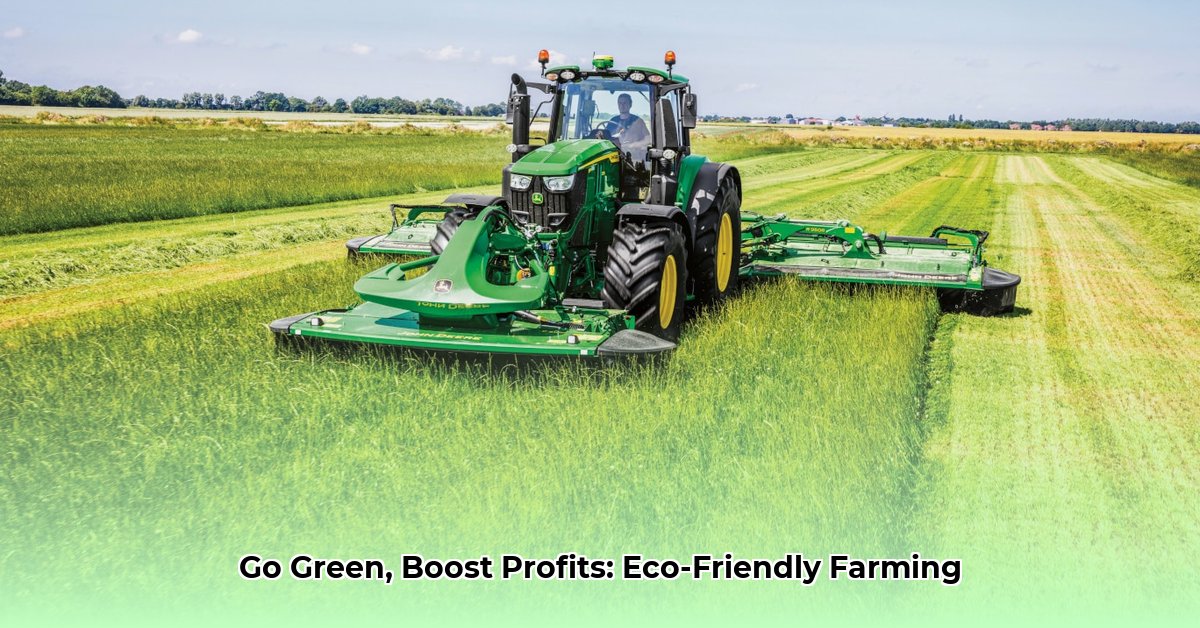
Commercial Tractors and the Greening of Agriculture
Sustainable agriculture is no longer a niche concept; it's a necessity. How can farmers maintain productivity while minimizing their environmental impact? Commercial tractors play a crucial role, and understanding their sustainability is key. This guide analyzes John Deere's offerings, comparing them to competitors and offering actionable recommendations for farmers, policymakers, and manufacturers.
John Deere: A Giant in Sustainable Agriculture
John Deere dominates the agricultural machinery market, providing a wide range of tractors and equipment. However, assessing the true "greenness" of these machines requires a deeper look than marketing claims. We need to examine their entire lifecycle: from manufacturing to disposal. How much carbon do they emit? How fuel-efficient are they? What is their impact on soil health? Unfortunately, comprehensive, independently verified data on these aspects is often limited.
The Sustainability Scorecard: What We Know and Don't Know
A comprehensive sustainability assessment requires detailed lifecycle analyses for each tractor model. This should include carbon footprint calculations, precise energy consumption data, and a clear evaluation of the impact on soil health. However, such detailed studies are often unavailable, hindering accurate assessments of John Deere's performance. Independent verification of manufacturers' claims is crucial for transparency. This lack of readily accessible data currently prevents definitive conclusions.
Deere vs. the Competition: A Comparative Analysis
Comparing John Deere's sustainability performance to competitors requires side-by-side lifecycle analyses of comparable models. The scarcity of consistent, independently verified data currently limits such thorough comparisons. Further research and industry transparency are essential for a fair assessment.
Actionable Recommendations: A Roadmap for a Greener Future
Let's translate analysis into action. What steps can be taken to make farming more sustainable?
For Farmers (Small Scale):
- Prioritize Fuel Efficiency: Opt for tractors sized appropriately for your needs; avoid oversized models that consume excessive fuel. (Smaller tractors are often more fuel-efficient)
- Utilize Precision Technologies: Implement GPS-guided planting and spraying to minimize resource use (fertilizers, pesticides, fuel). This improves efficiency and reduces environmental impact.
For Farmers (Large Scale):
- Match Tractor Size to Operation: Select tractors based on the scale of your operation, avoiding unnecessary fuel consumption from oversized equipment. (Oversized tractors are inefficient)
- Adopt Regenerative Agriculture: Incorporate practices like no-till farming and cover cropping to enhance soil health and carbon sequestration (a process that helps mitigate climate change).
For Governments and NGOs:
- Demand Transparency: Advocate for regulations requiring comprehensive lifecycle assessments of agricultural machinery to ensure transparency and comparability. (This is a critical step for more informed policy-making)
- Incentivize Sustainable Practices: Implement policies (subsidies, tax breaks) that reward farmers for adopting sustainable technologies and practices. (This makes sustainable farming more financially feasible)
For John Deere and Other Manufacturers:
- Embrace Transparency: Publicly release comprehensive lifecycle assessments of all tractor models, enabling independent verification. (Openness and data availability are critical)
- Invest in Sustainable Innovation: Commit to R&D for sustainable materials, alternative fuels (biofuels), and reduced-emission technologies. Design for the circular economy, optimizing tractor use and end-of-life management. (Long-term sustainability requires innovation)
The Bigger Picture: Collaboration for a Sustainable Future
Sustainable agriculture demands a collaborative approach. Manufacturers must prioritize complete transparency, independent organizations must verify manufacturer claims, and governments/NGOs must incentivize sustainable practices. Only through combined effort can we truly assess and improve the sustainability of commercial tractors and secure a greener future.
How to Compare John Deere Tractor Lifecycle Emissions to Competitors: A Detailed Look
Key Takeaways:
- Modern tractors (25-75 HP) utilize emission control systems (DOC, DPF) to reduce pollution, albeit increasing complexity.
- Smaller tractors (<25 HP) may lack these systems, simplifying maintenance but limiting power.
- Selecting the right emission system involves balancing pollution reduction with operational practicality and cost.
- Comparing John Deere's lifecycle emissions to competitors requires a multi-faceted approach beyond stated emissions data.
- Independent data on long-term costs and reliability remains scarce, making direct comparisons challenging. (Independent verification is a key missing element.)
- Farmers must account for their specific needs and farming practices when choosing tractors.
Understanding Tractor Emission Systems
Tractor emissions are a key concern in sustainable agriculture. Advanced systems (DOC, DPF) in larger tractors (25-75 HP) reduce pollutants but increase maintenance demands. Smaller tractors, often used for specific sustainable applications, may lack these systems, simplifying maintenance but affecting power output. (Choosing the appropriate emission system is a complex decision.)
Evaluating Lifecycle Emissions: Beyond Manufacturer Claims
A comprehensive comparison of lifecycle emissions goes beyond manufacturer specifications. Key factors include:
- Fuel Efficiency: Directly impacts emissions.
- Maintenance Costs: Complex emission systems can lead to higher maintenance expenses.
- Longevity: A longer-lasting tractor lowers overall emissions per working hour.
- Material Sourcing and Recycling: Crucial for assessing complete environmental footprint. (The entire supply-chain matters.)
This complexity highlights the challenge in direct lifecycle emission comparisons between John Deere and its competitors. The lack of standardized, readily available independent data poses a significant obstacle.
Comparing John Deere to the Competition: The Data Gap
Direct comparisons of John Deere's lifecycle emissions with competitors are currently hindered by a lack of consistent, independently verified data. Greater industry transparency is necessary for informed decision-making. (More data is critical for informed assessment)
Actionable Steps for Farmers:
- Conduct Thorough Research: Go beyond marketing; seek out independent reviews and comparisons. (Independent verification is crucial)
- Assess Your Operational Needs: The choice of tractor depends on the task and the implications for fuel use and emission control.
- Prioritize Regular Maintenance: Develop comprehensive maintenance schedules to minimize downtime and prolong equipment life.
- Optimize Operational Efficiency: Avoid idling and maintain optimal RPMs to prevent issues with emission control systems.
Choosing a sustainable tractor requires careful consideration of various factors. The long-term lifecycle implications are often difficult to fully assess due to data limitations.